
TerraViso Ecological Fingerprint Intelligence
Habitats can share a name without being the same
- Two areas may carry the same habitat classification and still be very different places.
- Their vegetation, structure, terrain, moisture, surrounding landscape and other environmental characteristics can vary — sometimes substantially.
- Ecological Fingerprint Intelligence is TerraViso's approach to looking beyond the habitat label and exploring the characteristics that make one ecological area similar to, or different from, another.

Classification tells us what something is called. Reference can tell us more.
Classification tells us what something is called. Reference can tell us more.
Classification tells us what something is called. Reference can tell us more.
- Habitat classification provides an essential common language for describing landscapes.
- But a classification cannot capture every characteristic of every place.
- TerraViso uses ecological reference to add another perspective.
- By learning from areas where habitat and ecological context are already understood, TerraViso can compare new areas against that growing body of reference knowledge.
- The objective is not to replace classification.
- It is to add context to it.
Learn from places we already understand
Classification tells us what something is called. Reference can tell us more.
Classification tells us what something is called. Reference can tell us more.
- Ecologists routinely use experience of other places when interpreting a landscape.
- A familiar woodland structure, grassland character or wetland setting can provide valuable context when assessing somewhere new.
- TerraViso applies a similar principle computationally.
- Its Knowledge Platform brings together ecological reference examples and the environmental evidence associated with them, creating a growing foundation from which new landscapes can be explored.
Known ecological reference → New landscape → Evidence of similarity and difference

Similarity can reveal what classification alone cannot
Similarity can reveal what classification alone cannot
Similarity can reveal what classification alone cannot
- Two mapped habitat areas may share the same classification but show quite different ecological characteristics.
- Conversely, areas in different landscapes may share patterns that suggest meaningful ecological similarity.
- Ecological Fingerprint Intelligence helps TerraViso explore those relationships.
- This can support questions such as:
- Which reference habitats does this area most closely resemble?
- Where does it differ from what we would normally expect?
- Are apparently similar habitats actually expressing different characteristics?
- Are there patterns across the landscape that deserve closer investigation?
- The answers provide evidence for interpretation — not an automated ecological verdict.
Recognise the expected. Notice the unusual.
Similarity can reveal what classification alone cannot
Similarity can reveal what classification alone cannot
- Reference is useful not only because it helps identify similarity.
- It can also help identify difference.
- Where an area behaves very differently from comparable ecological references, that difference may warrant further investigation.
- It could reflect genuine ecological variation, unusual landscape context, changing condition, limitations in the available evidence or simply something that needs professional review.
- TerraViso does not need to assume the reason.
- It can help identify where asking the question may be worthwhile.
A Knowledge Platform that grows through reference
A Knowledge Platform that grows through reference
A Knowledge Platform that grows through reference
- TerraViso's Knowledge Platform is designed to develop as additional ecological reference becomes available.
- Each carefully understood reference landscape contributes to a wider body of evidence against which future landscapes can be explored.
- Over time, this creates the potential for TerraViso to recognise ecological relationships across different places while retaining the evidence from which those comparisons were made.
- The value lies not simply in accumulating data, but in building useful ecological reference.
Professional judgement remains essential
A Knowledge Platform that grows through reference
A Knowledge Platform that grows through reference
- Similarity is evidence. It is not ecological truth.
- Two areas can appear similar in spatial or environmental data while differing in ways that require field observation, local knowledge or ecological expertise to understand.
- For that reason, Ecological Fingerprint Intelligence is designed to support professional interpretation rather than replace it.
- TerraViso can help identify relationships, differences and areas worthy of attention.
- People determine what those findings mean.

From ecological reference to landscape intelligence
- Ecological Fingerprint Intelligence becomes particularly powerful when combined with TerraViso's wider Ecological Intelligence.
- Reference helps us understand the characteristics of individual areas.
- Landscape analysis helps us understand where those areas sit, what surrounds them and how they contribute to wider ecological networks.
- Together they provide different perspectives on the same landscape......
What is here?
What does it resemble?
How is it different?
How does it relate to everything around it?
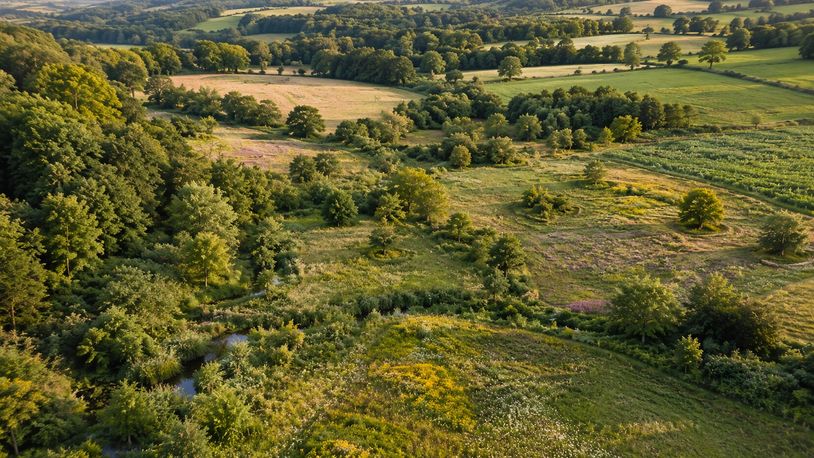
Every landscape adds another question
No reference library can represent every expression of nature.
Nor should it.
Landscapes vary, habitats change and ecological systems respond to local conditions in ways that cannot always be reduced to a label.
Ecological Fingerprint Intelligence is being developed to help TerraViso recognise that variation — learning from what is already understood while remaining alert to what is different.